AI in Hospitality Apps: 7 Ways to Boost Guest Experience & Revenue
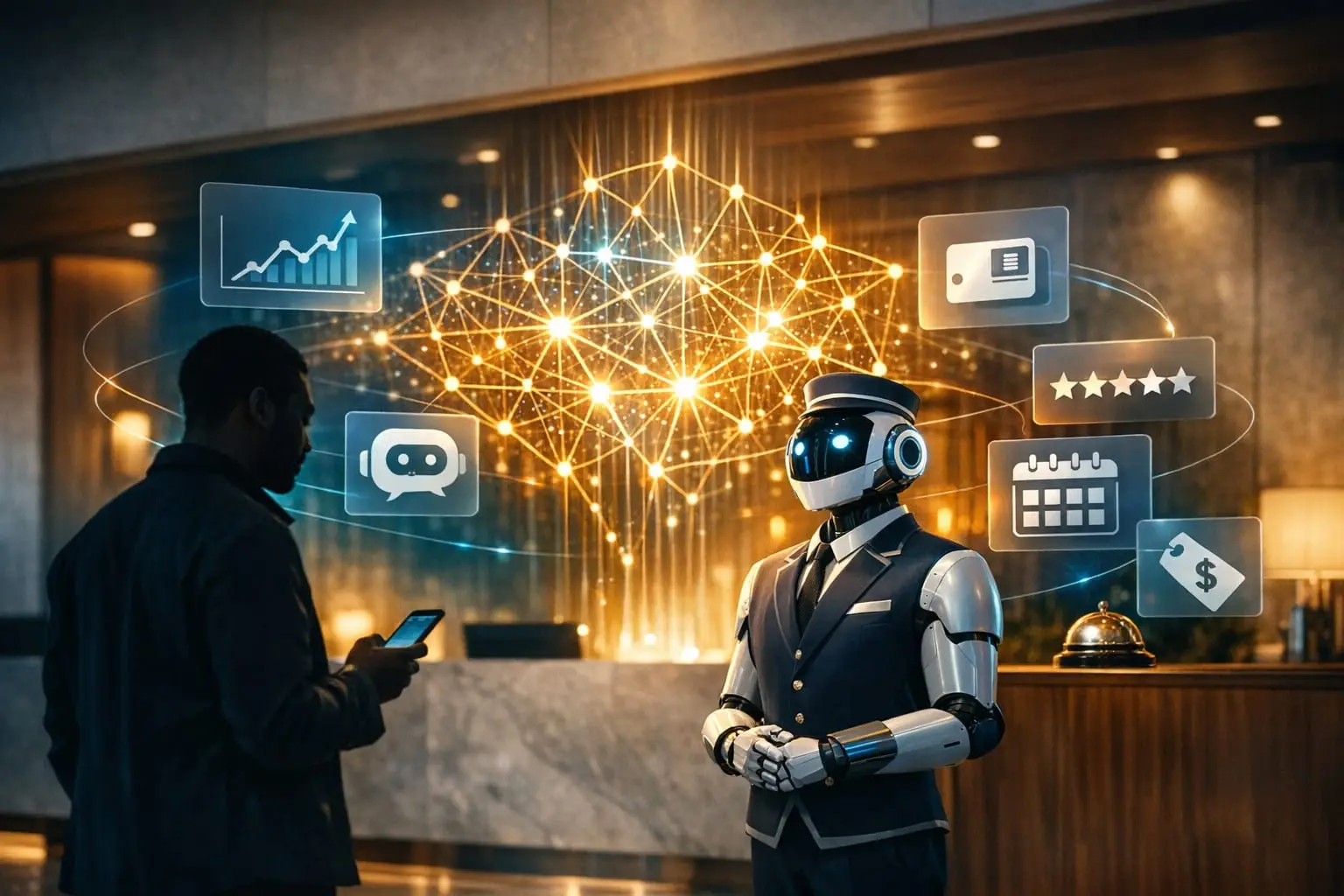
I was standing in a hotel lobby watching a perfectly normal human moment turn into a small disaster.
A family had just arrived after a long flight. Two kids were melting down in that slow, exhausted way. The dad was doing the “I’m fine” face. The receptionist was lovely… and completely swamped. Phones ringing. A queue forming. Someone asking about late checkout like it was a constitutional right.
And the weird part? The hotel had an app. A decent-looking one. But nobody was using it because it didn’t actually help in that moment. It was basically a digital brochure with a login screen.
That’s the gap AI can close—when it’s done with a bit of humility. Not “AI will revolutionise everything!” but “can we remove the annoying bits and make the good bits easier?” If you’re building a hospitality app (or trying to rescue one), these are seven practical ways AI in hospitality can boost guest experience and revenue without getting creepy about it.
1) Personalisation that feels like good hospitality, not surveillance
Guests don’t want to feel “tracked”. They want to feel noticed. There’s a difference, and it’s mostly about restraint.
In a hospitality app, AI personalisation works best when it uses the data you already have—booking details, stated preferences, past stays—rather than hoovering up everything it can. The Hospitality AI Collective has been banging this drum for a while: trust is the whole game, so focus on operational efficiency tools over intrusive data collection.
What this looks like in practice:
- Pre-arrival preferences that are genuinely useful: pillow type, room temperature, quiet room request, near lift vs far away.
- Contextual recommendations: “You’ve got a 7am meeting tomorrow—want a takeaway breakfast booked for 6:15?”
- Smart nudges that don’t nag: one message at the right time beats five “special offers” at the wrong time.
If you’re building this, start simple. Ask for two preferences during booking, not twenty. Let guests edit them easily. And always give a “no thanks” option that actually works.
2) AI chatbots that don’t make people want to throw their phone
Most hotel chatbots fail in a very specific way: they’re polite, fast, and utterly unhelpful. Like arguing with a toaster.
A good AI chatbot in a hospitality app should do three things well: answer common questions, handle bookings/requests, and know when to hand off to a human. That last bit is the secret sauce.
Here’s what I’ve seen work:
- Instant answers for repetitive stuff: Wi‑Fi, parking, breakfast times, pool rules, late checkout policy.
- Transactional flows that complete the job: book a table, reserve a spa slot, request towels, report a noisy room.
- Clean escalation: “I can’t fix this—want me to connect you to reception?” with a real handover, not a dead end.
Also… give it a personality that matches the property. Not “quirky AI sidekick”, just the tone you’d want from your best front desk person on a calm Tuesday.
And please, for the love of all that is holy, don’t hide the phone number behind three screens “to encourage app usage”. People remember that sort of thing.
3) A virtual concierge that sells without feeling salesy
Upselling gets a bad reputation because it’s often done badly. “Congratulations on arriving—would you like to spend more money?” No one loves that.
AI can make upsells feel more like a helpful concierge. The trick is timing and relevance. Offer things that match the guest’s stay, not your revenue targets (even though, yes, it helps revenue too).
In your hospitality app, a virtual concierge can:
- Bundle experiences based on stay type: romantic weekend vs business trip vs family holiday.
- Recommend add-ons with a reason: “Rain forecast tomorrow—want to book the indoor spa?”
- Surface local partners: tours, museums, restaurants—done tastefully, with clear pricing.
One small but powerful tactic: make offers reversible. “Add breakfast now—remove anytime before 10pm tonight.” That reduces the psychological friction, and you’ll see conversion go up without turning the app into a marketplace bazaar.
4) Dynamic pricing and revenue management that isn’t blind to reality
Dynamic pricing can be a dirty phrase, but it doesn’t have to be. The point isn’t to squeeze guests—it’s to match demand and availability in a way that keeps occupancy healthy and revenue predictable.
AI revenue management in hospitality can analyse booking pace, local events, seasonality, competitor rates, and cancellation patterns. In an app context, you can connect this to smart offers that fill gaps without cheapening the brand.
A few ways to apply it without making a mess:
- Targeted value instead of blanket discounts: late checkout included, breakfast included, parking included.
- Length-of-stay logic: nudge two-night stays when you’re likely to have awkward single-night holes.
- Direct booking perks that are real: flexible cancellation, room choice, priority upgrades (when available).
The caution: don’t let the algorithm run the hotel. If there’s a big event in town and rates spike, fine—but your app messaging should still sound human. Guests can smell “computer says no” from a mile away.
5) Smarter operations that guests never notice (and that’s the point)
Some of the best AI wins are invisible. Guests don’t leave reviews saying, “The inventory forecasting model was exquisite.” But they do notice when you run out of baby cots. Or when housekeeping misses a room because the schedule is chaos.
AI in hospitality apps can feed operational systems with better signals—especially when guests make requests in-app. That data becomes a live pulse of what’s happening.
- Inventory management: predict demand for linens, toiletries, minibar items, room service staples.
- Staffing optimisation: align housekeeping and front desk coverage with arrivals/departures and event spikes.
- Queue reduction: push check-in windows, digital keys, or appointment-style reception for peak times.
This is where ethics and trust quietly show up again. You can improve operations without collecting weird personal data. Most of the time, you just need better process data—what’s requested, when, and how often.
6) Predictive maintenance that stops the “sorry about that” moments
Nothing kills the mood like a broken air con at midnight. Or a lift that sounds like it’s auditioning for a horror film.
Predictive maintenance uses AI to spot patterns—equipment running hot, power usage anomalies, repeated fault codes—so you fix things before guests stumble into them. It’s not glamorous, but it’s one of the fastest routes to better reviews.
Where the app comes in is communication. If maintenance is happening, the app can:
- Set expectations: “Lift maintenance 11am–1pm. Use the east lift.”
- Offer alternatives: move a guest proactively if a room issue is likely.
- Log issues cleanly: guests report problems with photos, room number auto-filled, and status updates.
It’s amazing how forgiving people can be when you’re honest early. It’s the surprise that stings.
7) Energy optimisation that saves money without making the hotel feel stingy
Energy costs aren’t romantic. But they are very real. And AI can help hotels reduce waste while keeping comfort high—especially when integrated with smart building systems.
The obvious fear is turning rooms into miserly little boxes where the lights go off if you blink too slowly. Don’t do that. The goal is to be smooth.
AI can help by:
- Learning occupancy patterns (in aggregate) to adjust heating/cooling intelligently.
- Co-ordinating with housekeeping so rooms aren’t chilled or heated for hours when nobody’s there.
- Spotting anomalies: a room consuming 3x normal energy might have a fault, not a “guest who loves saunas”.
If you mention sustainability in the app, keep it grounded. “We adjust room temperature when you’re out, to cut waste—tap here to override.” Give control. People like control.
So… what does “AI-native hospitality” actually mean?
By 2026, a lot of leading hotels are aiming to integrate AI-native platforms—systems designed from the start for seamless, personalised guest interactions rather than bolted-on “AI features”. That direction makes sense.
But if you’re building an app for your own property (or a small group), you don’t need to wait for some perfect future stack. You can add AI in hospitality in a way that’s practical and respectful right now.
If I were prioritising—because we all have budgets and deadlines and that one stakeholder who changes their mind every Thursday—I’d start with the stuff that removes friction: messaging that works, requests that complete, operations that stop failures. Then layer in personalisation and revenue features once trust is earned.
The best hospitality tech doesn’t feel like tech. It feels like someone thought ahead. Like someone cared.
And when it’s done right, the lobby gets quieter. The receptionist breathes. The kids get to their room faster. The app finally becomes what it should’ve been all along—helpful in the moment that matters.